
By Daniel Aondoaseer Zendesha
Every time I hear another young Nigerian say, "I want to japa," I ask myself one question: What has this country failed to offer that makes leaving feel like the only path to fulfilment?
After listening to the story of 21-year-old Cynthia Omede, I found myself asking that question again.
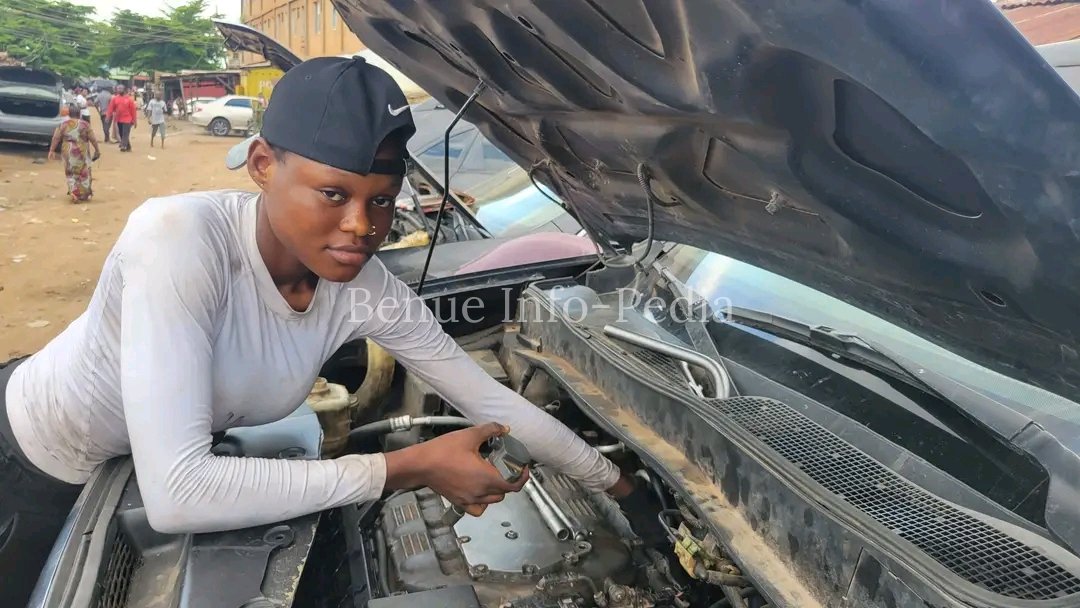
Cynthia is not a doctor. She is not a software engineer. She is not an oil executive. She is a young automobile technician working in a mechanic workshop in Makurdi, Benue State. With confidence, she removes engines, repairs faulty vehicles and continues to sharpen her skills in a profession that many still see as a man's world.
Instead of celebrating her courage, however, society has too often rewarded her with doubt, stereotypes and, according to her account, harassment.
That should trouble all of us.
I believe every nation should be proud when a young woman chooses to challenge outdated beliefs and excel in a technical profession. Instead, too many women still have to fight for acceptance before they can even demonstrate their competence.
If Cynthia's account reflects the reality faced by many women in technical trades, then we must ask ourselves difficult questions. Why should a young woman have to constantly prove she belongs simply because she chose to repair engines instead of sew clothes? Why should professionalism be mistaken for availability? Why should determination be met with discrimination?
These are not just Cynthia's questions. They are questions for our society.
What saddens me most is not that Cynthia dreams of Japan. It is that she believes she must leave Nigeria before her talent can truly be appreciated.
That is a painful verdict on the environment we have created for many of our young people.
Across Nigeria today, thousands of talented youths are quietly preparing to leave—not because they hate their country, but because they are searching for dignity, opportunity, safety and professional growth. We often reduce this reality to the popular word "japa," but behind that word are deeply personal stories of frustration, sacrifice and hope.
Yet Cynthia's story is not without hope.
Her journey reminds us that mentors still matter. The support she says she has received from her trainer demonstrates the impact one person can have by believing in another. Imagine how many more Cynthias Nigeria could produce if more employers, artisans and institutions chose encouragement over prejudice.
I do not believe the answer is to tell young Nigerians not to leave. Everyone has the right to pursue opportunities wherever they exist. But I do believe Nigeria has a responsibility to become a place where staying is also a meaningful and rewarding choice.
That means creating workplaces where women are respected. It means investing in vocational education. It means rewarding skill instead of gender stereotypes. It means protecting workers from harassment and ensuring that talent—not connections or bias—opens doors.
Whether Cynthia eventually builds her career in Makurdi, Tokyo or anywhere else in the world, I sincerely hope she succeeds.
But I also hope that one day, no young Nigerian will feel that crossing an international border is the only way for their dreams to come alive.
Until then, every departure should challenge us to look inward—not only at what we are losing, but at why we keep losing it.
And perhaps that is the real story behind Cynthia's dream.
Cynthia's Dream to Leave Nigeria Should Make Us Pause
At just 21, Cynthia Omede has earned respect for repairing vehicles in a Makurdi mechanic workshop. But behind her determination lies a story of gender stereotypes, workplace challenges and a growing desire to seek opportunities beyond Nigeria.


Comments
Join the Discussion
No comments yet. Be the first to share your thoughts!
Sign in to join the conversation.