
By Daniel Aondoaseer Zendesha
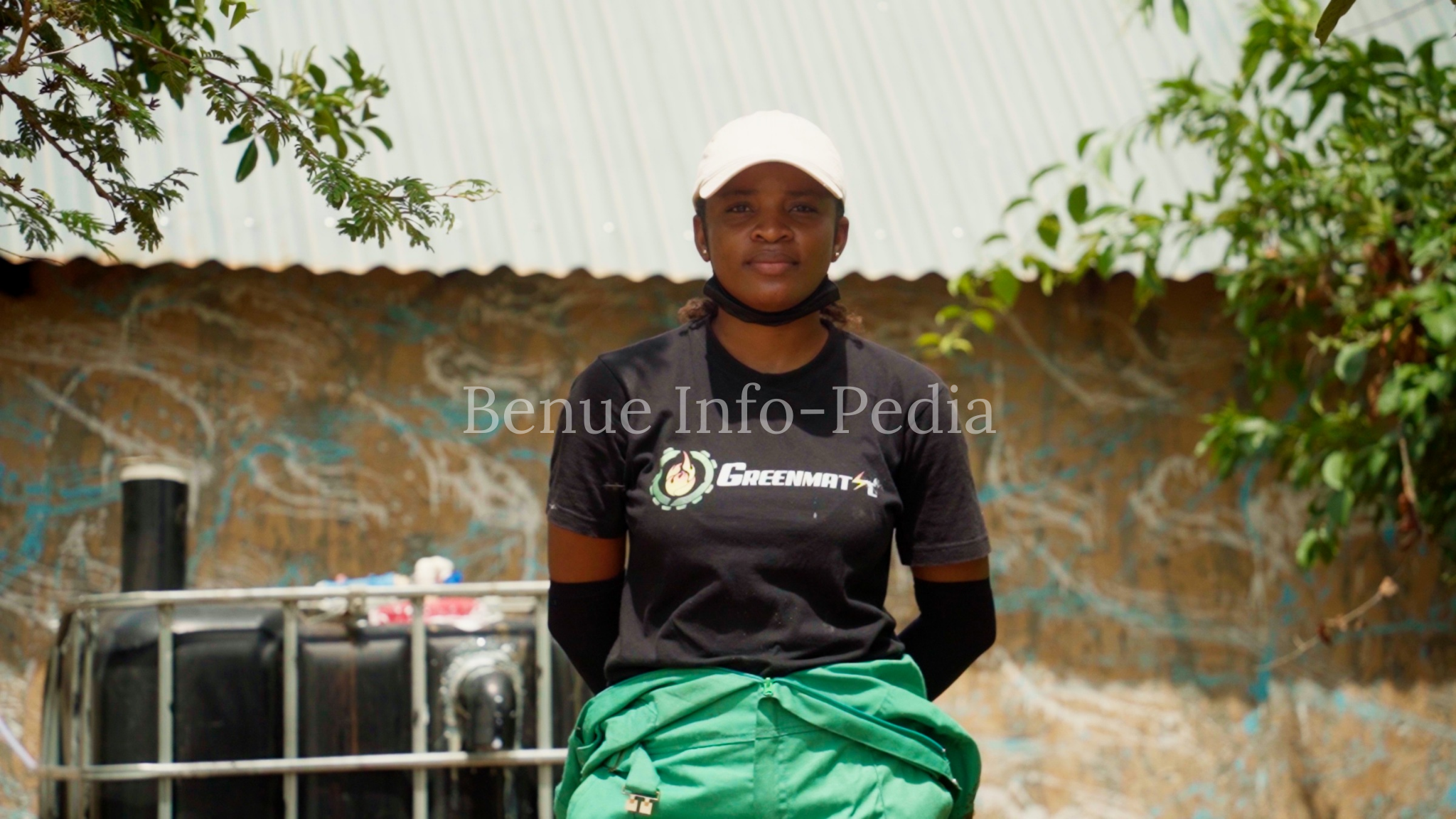
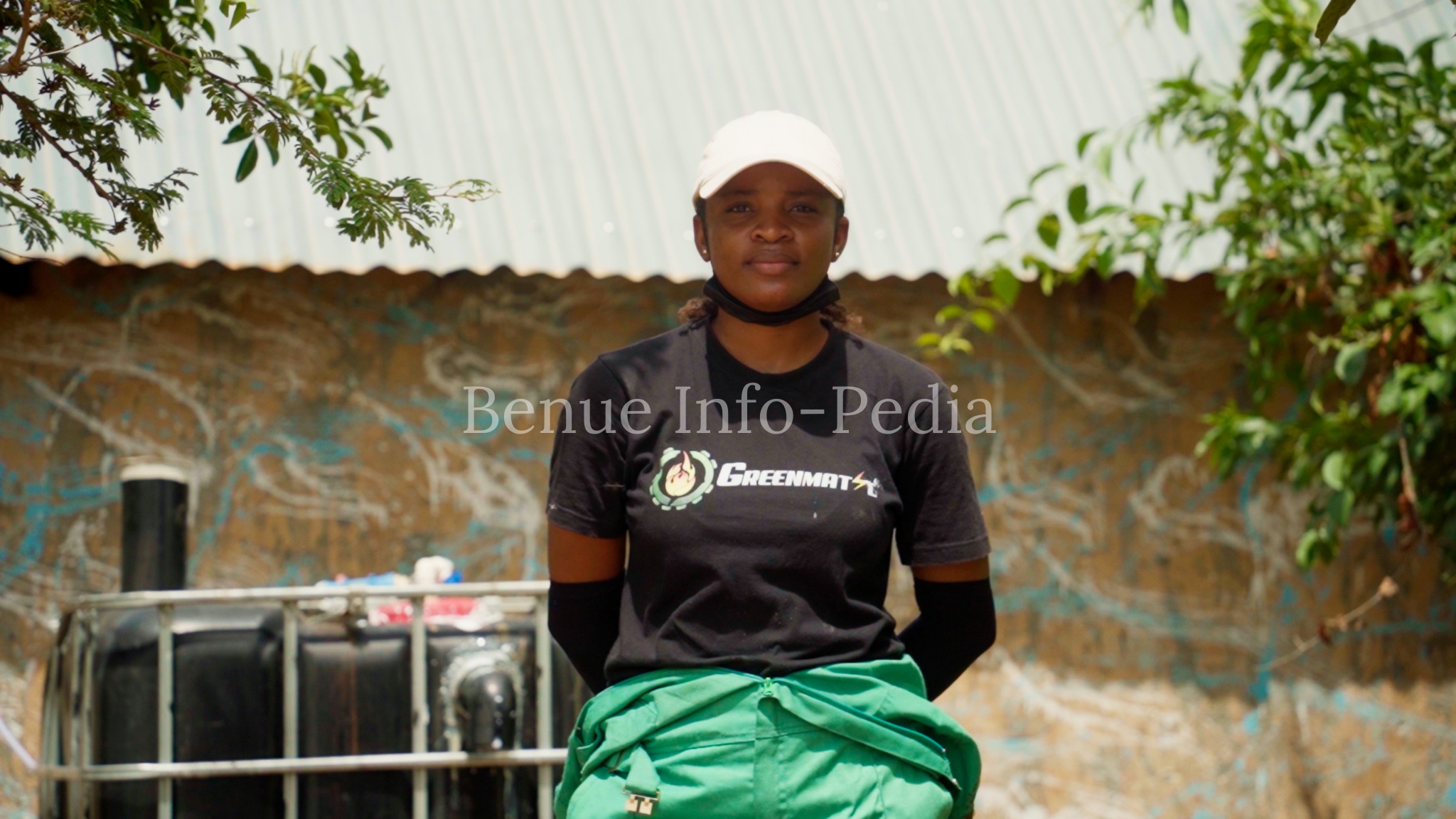
For Mercy Msenhemba Atsuku, the conversation around clean energy is not only about technology. It is also about people, skills and opportunity.
The Benue-born innovator wants more women and young people to see that they can participate in solving some of the environmental and energy challenges facing their communities.
Growing up in Logo LGA, Benue State, Atsuku experienced the burden of firewood collection. Her search for alternatives eventually took her into biogas technology, which she first began working with at Baban Wondo in Plateau State.
Today, she is using that experience to promote biogas, clean cooking and organic waste management.
Breaking into a male-dominated field
Atsuku says entering the biogas space was not always easy.
She describes herself as a woman who ventured into a field where men were more prominent. She also recalls being the first female biogas student in her school.
There were moments of uncertainty.
But rather than allowing doubt to stop her, she continued learning, experimenting and developing prototypes.
Her journey demonstrates an important point: innovation does not necessarily begin with perfect conditions. Sometimes, it begins with a problem, curiosity and the willingness to keep searching for a solution.
Why women matter in clean cooking
Women are often closely connected to household cooking and fuel decisions, particularly in communities where traditional cooking fuels remain common.
Atsuku believes women should therefore be part of conversations about clean cooking technology, waste management and renewable energy.
Her ambition includes training more women to fabricate and maintain biodigesters, manage organic waste and explore clean-cooking alternatives.
Such skills could potentially create new opportunities for women beyond being consumers of energy technology.
They could become technicians, entrepreneurs, trainers and innovators within the emerging clean-energy sector.
From personal experience to community solutions
Atsuku's work through Green Matic focuses on biodigesters designed to convert organic waste into biogas for cooking.
Through the Samuel Aondoaver Yamsa Green Future Initiative, she says she is also working towards supporting vulnerable communities with biogas systems.
The approach connects several issues that affect communities at the same time: access to cooking energy, waste disposal, environmental sustainability and agricultural development.
But scaling such solutions will require more than individual effort.
Access to finance, technical training, reliable maintenance, public awareness and supportive policies will all be important if clean-cooking technologies are to reach more households.
A message for young people
For young Nigerians considering careers in technology and innovation, Atsuku's story offers another lesson.
Her journey did not follow a conventional path.
After completing NYSC, she says she turned down a bank job and another opportunity with an NGO before deciding to investigate alternative cooking-energy solutions.
A video about biogas technology in India sparked her interest and set her on a new path.
She began researching, experimenting and learning through trial and error.
Today, she wants others to understand that difficult circumstances do not necessarily have to determine their future.
Her message is straightforward:
Every problem has a solution.
Building a cleaner-energy future
Nigeria's clean-cooking challenge is too complex to be solved by one person or one technology.
However, innovators such as Atsuku are contributing to a conversation about what locally developed solutions could look like.
For Benue, the opportunity may be particularly relevant because agriculture generates large amounts of organic material that could potentially form part of waste-to-energy systems when properly managed.
The bigger question is whether communities, government, private organisations and development partners can create an environment where innovations like these can be tested, improved and scaled responsibly.
Atsuku's story is therefore not simply about biogas.
It is about turning lived experience into innovation—and ensuring women have a place at the table when the future of energy is being designed.
🎥 Watch the Documentary:https://youtu.be/3mIXXv5xLcU?si=62tj-WtS5LDg82ds
📖 Continue the 7-Day Series
Day 1: https://benueinfo.com/article/from-firewood-to-biogas-how-benue-woman-mercy-atsuku-is-turning-waste-into-clean-energy?utm_source=copy_link&utm_medium=social&utm_campaign=article_share
Day 2: https://benueinfo.com/article/the-hidden-cost-of-firewood-why-mercy-atsuku-is-searching-for-cleaner-cooking-solutions?utm_source=copy_link&utm_medium=social&utm_campaign=article_share
Day 3: https://benueinfo.com/article/biogas-explained-how-mercy-atsuku-is-turning-organic-waste-into-clean-cooking-energy?utm_source=copy_link&utm_medium=social&utm_campaign=article_share
Day 4: https://benueinfo.com/article/from-waste-to-energy-how-mercy-atsuku-is-promoting-biogas-and-clean-cooking?utm_source=copy_link&utm_medium=social&utm_campaign=article_share
Mercy Atsuku: Why More Women Should Be Part of Nigeria’s Clean Energy Future
Mercy Atsuku’s journey from experiencing firewood collection in Logo LGA to promoting biogas highlights how lived experience, innovation and determination can inspire cleaner cooking solutions and create opportunities for women and young Nigerians.

Comments
Join the Discussion
No comments yet. Be the first to share your thoughts!
Sign in to join the conversation.