

By Daniel Aondoaseer Zendesha
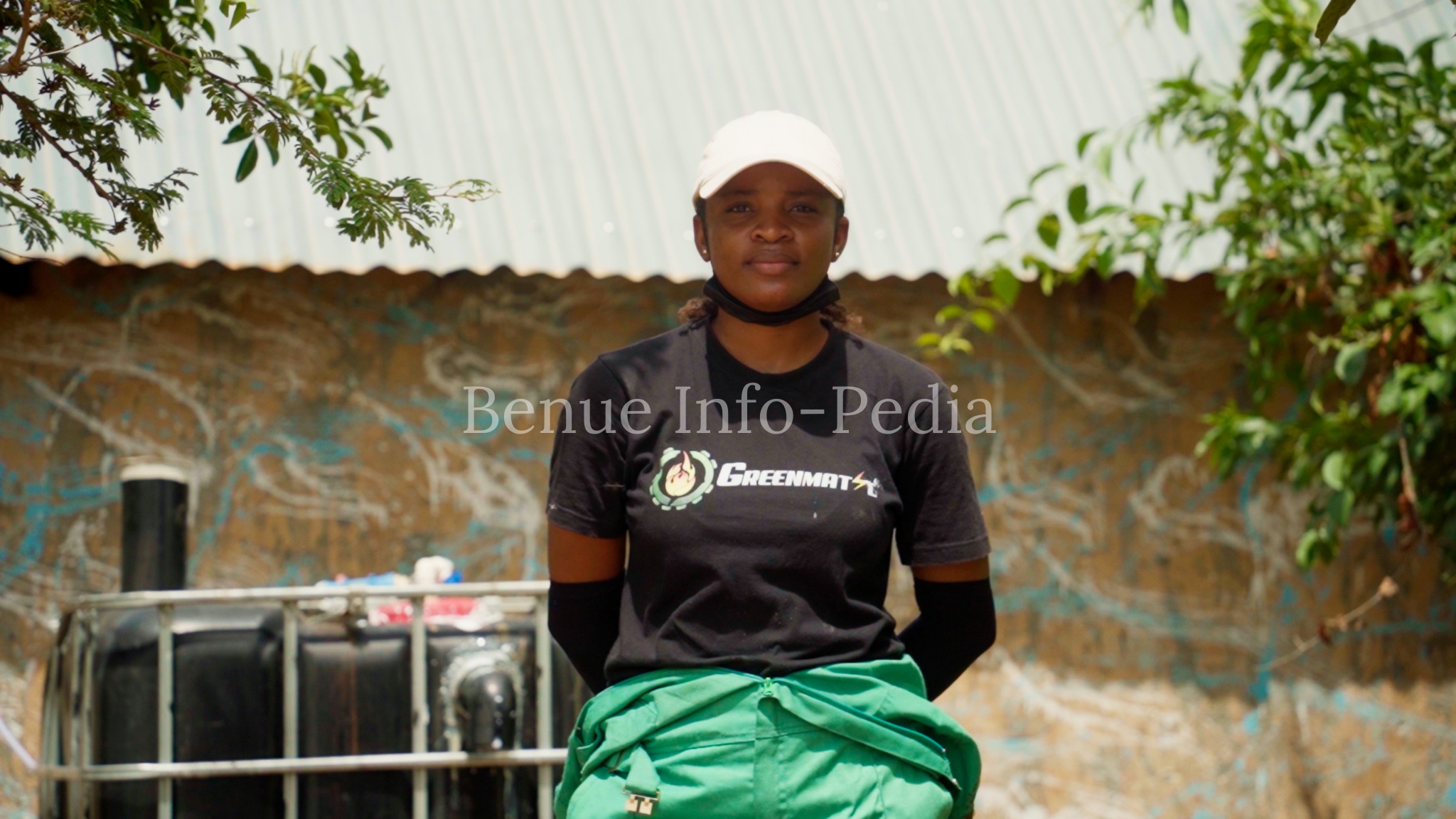
For Mercy Msenhemba Atsuku, the journey from firewood to biogas is not just a personal story. It is part of a larger question about how Nigerian communities can find practical and sustainable ways to meet their energy needs.
Growing up in Logo LGA, Benue State, Atsuku experienced the challenges associated with firewood collection. Her search for alternatives eventually introduced her to biogas technology, which she first began working with at Baban Wondo in Plateau State.
Today, through her work with Green Matic and the Samuel Aondoaver Yamsa Green Future Initiative, she is promoting conversations around biogas, clean cooking, organic waste management and sustainable energy.
A solution rooted in what communities already have
One of the ideas behind biogas is the possibility of using organic materials that communities already produce, including animal and other biodegradable waste.
Through a biodigester, suitable organic materials can be broken down in an oxygen-free environment to produce biogas. The gas can then be used for cooking, while the remaining material may have agricultural applications when properly processed and managed.
For an agricultural state like Benue, the concept creates an interesting link between farming, waste management and energy production.
But the technology is not a one-size-fits-all solution.
Its success can depend on factors including the availability of suitable organic material, installation costs, technical expertise, maintenance and community acceptance.
Why local innovation matters
Atsuku's experience highlights the importance of supporting local innovators who are developing solutions around problems experienced by their own communities.
Her focus is not only on technology. She also wants more people, particularly women and young people, to understand that they can participate in the clean-energy sector.
She has spoken about training women to fabricate and maintain biodigesters, manage waste and explore alternative clean-cooking technologies.
That could create opportunities for skills development and entrepreneurship while increasing local capacity to maintain clean-energy systems.
A bigger conversation for Benue
Benue's agricultural economy means communities generate significant quantities of organic material.
The question is whether some of these materials can be managed more effectively and, where technically and economically appropriate, incorporated into systems that produce useful energy or agricultural inputs.
This requires collaboration.
Government institutions, private businesses, communities, development organisations, researchers and innovators all have potential roles to play.
For clean-energy innovations to move beyond individual projects, communities need access to information, financing, technical support and appropriate infrastructure.
Beyond one documentary
Atsuku's documentary is ultimately an invitation to think differently about energy and waste.
It tells the story of a woman whose childhood experience with firewood became a motivation to search for another path.
Her journey does not suggest that biogas alone can solve Nigeria's clean-cooking or energy challenges.
Instead, it demonstrates why locally driven innovation and public conversations about sustainable energy matter.
As Benue and other Nigerian communities consider their energy future, stories like Atsuku's raise an important question:
What practical solutions can communities develop using the resources already around them?
For Atsuku, part of the answer lies in looking at waste differently.
What is discarded today could, with the right technology, knowledge and investment, become part of tomorrow's solution.
🎥 Watch the Documentary
https://youtu.be/3mIXXv5xLcU?si=62tj-WtS5LDg82ds
📖 Continue the 7-Day Series
Day 1: https://benueinfo.com/article/from-firewood-to-biogas-how-benue-woman-mercy-atsuku-is-turning-waste-into-clean-energy?utm_source=copy_link&utm_medium=social&utm_campaign=article_share
Day 2: https://benueinfo.com/article/the-hidden-cost-of-firewood-why-mercy-atsuku-is-searching-for-cleaner-cooking-solutions?utm_source=copy_link&utm_medium=social&utm_campaign=article_share
Day 3: https://benueinfo.com/article/biogas-explained-how-mercy-atsuku-is-turning-organic-waste-into-clean-cooking-energy?utm_source=copy_link&utm_medium=social&utm_campaign=article_share
Day 4: https://benueinfo.com/article/from-waste-to-energy-how-mercy-atsuku-is-promoting-biogas-and-clean-cooking?utm_source=copy_link&utm_medium=social&utm_campaign=article_share
Day 5:
https://benueinfo.com/article/mercy-atsukus-clean-energy-vision-can-biogas-help-build-a-sustainable-future-for-benue?utm_source=copy_link&utm_medium=social&utm_campaign=article_share
Mercy Atsuku’s Clean Energy Vision: Can Biogas Help Build a Sustainable Future for Benue?
Mercy Msenhemba Atsuku’s journey from collecting firewood in rural Benue to promoting biogas and clean energy highlights how lived experience can inspire innovation, sustainability and greater participation by women in Nigeria’s energy transition.
Comments
Join the Discussion
No comments yet. Be the first to share your thoughts!
Sign in to join the conversation.